April Dev Update: New aquatic race, ship combat update, battlefield generation, and more

aprildevupdate

April is over and development on Predestination is going well. This month we completed the internal workings for the ship design and weapon technology systems, finished hooking the tactical combat system into the main game and tidied that system up. We implemented tons of your ideas into the ship combat system, like smart-missiles that deploy mines around the target, weapons that fire clouds of charged plasma, and deployable minefields for planet defense. Thanks so much for all of your great ideas and feedback!

Character artist Connor Murphy has finished our final core race (the yet-to-be-named Aquatic race) and completed a fantastic visual reboot of our first robotic race, The Starforged. You can see the new artwork for both races below! We’ve also been working with Connor on figuring out the best way to approach the backer-sponsored race artwork.

Based on your feedback, Connor has already started to revamp the feline race we showed in last month’s update with more realistic artwork that matches the rest of the game’s visual style, and I think you’ll be pleased with the results when it’s finished. Once that’s finished, we’ll be in touch with all of our race designer backers to get started on getting them into the game.

aquaticallsmall

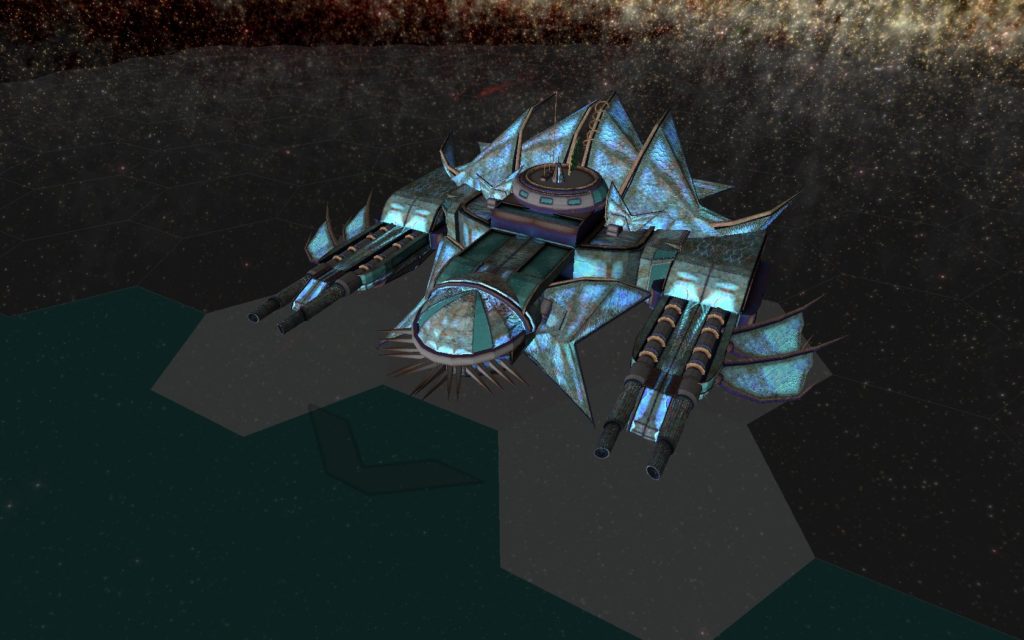
The yet-to-be-named Aquatics are our sixth and final core race apart from the backer races, and we’d love to hear your ideas on what they should be like in-game. We see them as aggressive militarists who see ownership of every ocean planet in the galaxy as their sovereign right. We see them as a dictatorship that interacts with other races through intimidation and military threat more than diplomacy. Industry and research would probably take a hit from working under water, but their natural hunting instincts would make them excellent ship pilots.

The Aquatic race will definitely start the game with some kind of mech suit that grants bonuses to ground combat, as they needed this technology to achieve space flight and interact with other races. They are just as at-home on Terran planets as Ocean, but would probably actively flood Terran worlds to make them less useful to other races. They may also have developed technology that can thaw out a tundra planet by injecting radioactive elements into the planet’s core and flooding the atmosphere with greenhouse gases.

Rather than deciding on the race’s abilities and name ourselves, we’ve decided to open the Aquatics up to the community! We’d love to hear your suggestions for a name for this race, stats or traits you think they should have, and any special technologies they should start with. We’d also love to hear your ideas on what technologies and special traits you’d like all aquatic races in Predestination to have. Leave a comment here or head over to the aquatic race feedback thread on the forum and let us know what you think! We’ll publish a full race reveal in two week’s time when we’ve picked our favourite suggestions!

starforgedallsmallsharp

Above is the rebooted artwork for The Starforged, the first race we revealed during the Kickstarter campaign. Connor felt that the art needed an update to match the visual quality of newer races like the Sauros, and I think he’s done an amazing job on the reboot. The Starforged soldier unit is on the left, the scientist is in the middle, and the worker/civilian robot is on the right. We’ve nicknamed the worker the “Espresso machine” :D

shipcombatupdate

Combat resolution: One of the things we implemented this month was the combat resolution system that decides when fights happen and what the battlefield looks like. Fleets in Predestination move in FTL once per turn and only meet each other at destinations like stars and temporal rifts. When two fleets meet, both players can select from four courses of action and the combination of options selected determines what happens:

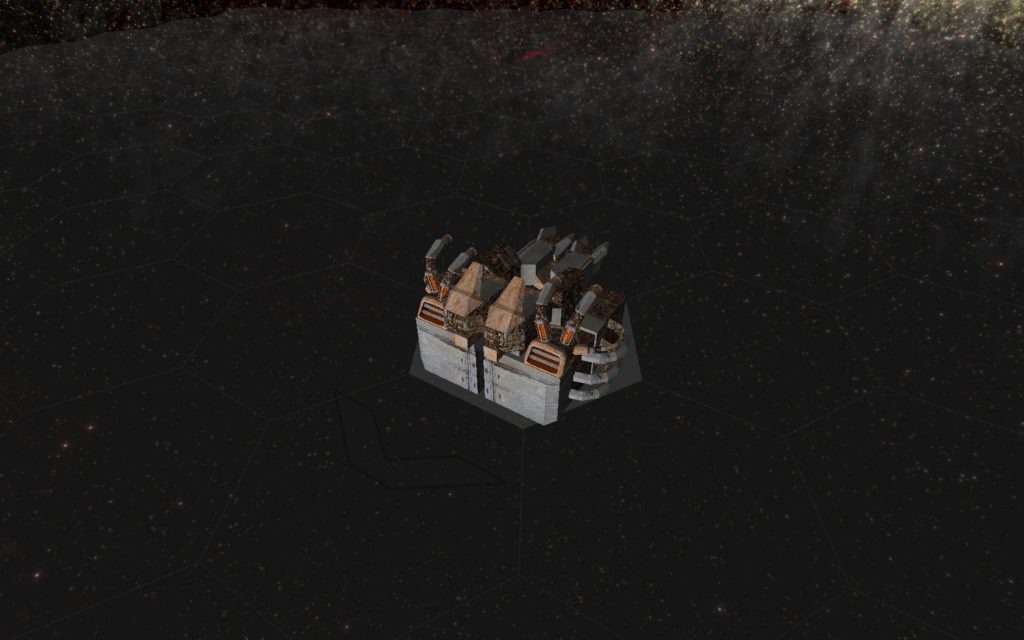
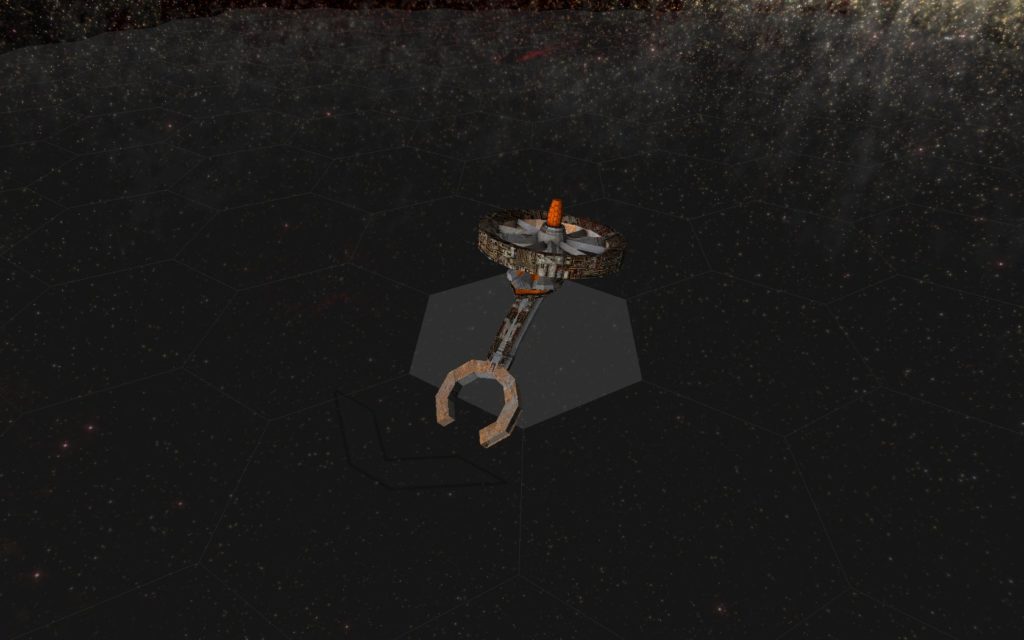
  • Attack Planet: Attempt to attack a selected enemy planet in the system. The enemy must have a planet in the system for this option to be highlighted. You start on one side of the battlefield, and the enemy planet is visible in the background on the other side. Planetary defences like starbases and orbital cannons are automatically placed on the enemy side.
  • Defend: This puts your fleet into a defensive posture and does not engage the enemy fleet. If the enemy fleet selects to attack a planet in the system that you own, your fleet automatically defends that planet and is included in the combat against that planet.
  • Intercept: Attempts to intercept the enemy fleet early and engage. If the enemy fleet selects Attack a planet, this option will instead engage the enemy in open space (no planet bonuses). If the enemy fleet selects to Defend, there’s a 50% chance that you’ll catch them in open space and start combat and a 50% chance that no combat will happen at all.
  • Retreat: Attempts to retreat and set course to the nearest friendly star system. If the enemy fleet selects the Intercept option, there’s a 50% chance of catching your fleet and beginning combat in open space and a 50% chance they get away safely.

Battlefield generation: The battlefield will now take into account the star system you’re in. Battles in systems with asteroid belts are likely to take place inside the belt, while battles inside a nebula will be filled with nebular gas clouds. Battles over a planet will also display the planet in the background behind the defending fleet, and orbital cannons and starbases will be placed on the battlefield.

We have a few more ideas up our sleeves for more natural battlefield modifiers, like pirate hideouts in a system or even space monsters interrupting your battle! The battlefield size will also scale up with the number of ships involved and the maximum range of the ships involved. This way every battle will start with the opposing fleets placed between one and two turns worth of movement away from each other. This should stop snipers from dominating as nobody will be in range to fire on the first round.

combatplanet

Ship placement round: Before each combat begins, you’ll place your ships and structures on the battlefield. We plan to make it possible to pre-design a layout and save it with your fleet for future battles, but right now that feature is not implemented. Battles in orbit of a planet will have starbases and orbital cannons in fixed positions if the planet has built them. Researchable technologies will also add deployables like mine fields, shield bubbles, cloaking fields and nebulae so you can come up with a clever strategy for system defense and design your ships around them. The ship placement phase is a blind phase, so you don’t know where the enemy has placed his ships or structures until you submit your layout. Think of this like setting up a chess board, except you get to decide where each piece goes.

First combat round: The first round of combat after placing ships in Predestination will be mostly movement. The longest-range ships will not be in firing range of the enemy fleet yet; missiles and drones can be fired but will take at least two turns to reach the enemy. This lets you set up strategic positioning to counter the enemy’s selected fleet layout. For example, you may notice that the enemy has laid a minefield in front of its snipers and decide to send ships around the side to avoid them.

The rest of the combat: The player’s and enemy’s ships will will take turns as usual for the rest of the game, like a game of chess where each move is a reaction to the other player’s. For example, the enemy may fire missiles at your large battleship and you may move some point defense frigates into positions where they can shoot down the missiles. Combat ends when all of one side’s ships have been eliminated or are no longer on the battlefield. Ships can retreat at any time during the battle by activating the Warp Drive module (built into all ships). This has a charge-up time of one full round, making the ship leave the battlefield on its next turn.

futureupdates

We’ve been working on a lot of the core planetary and fleet combat code of Predestination so far, but it’s difficult to show off interesting ship weapons or galactic exploration without a good user interface. The next step for us is to work really hard on those user interfaces and get as many of them into the game this month as possible. As a side-effect, we’ll be able to show you more of our progress in videos and live demos, giving a clearer impression of how the game will actually play when it’s finished.

So far we’ve focused on trying to put together one big monthly update for our Kickstarter backers and fans following the Predestination development blog. We’re doing a lot of work steadily throughout the month but then trying to cram it all into one roundup article like this or a race reveal post. We’ve had a few requests from backers for more frequent updates and more community engagement, so I wanted to put this question out to the community. Would you like to see more frequent updates containing earlier work-in-progress artwork, game development, user interfaces, buildings etc? Our options are essentially:

  • Monthly updates: One big update every month summarising that month’s progress (like this post).
  • Frequent updates: Posting early work-in-progress artwork, buildings, gameplay and user interfaces separately with just a few lines or paragraphs of text explaining each one.
  • Both: Do the smaller updates, and then summarise them each month in a smaller roundup article on the blog and Kickstarter.

We’d love to start doing more frequent updates if that’s what the community wants. The updates would be a lot more rough and subject to change, but it would let us collect feedback earlier in the development process. Please let us know in the comments or head over to the official update poll on the forum and vote!

Cheers,

– Brendan, Lead Developer

Predestination Race Reveal: The Sauros

Sauros race reveal

The Sauros are Predestination’s first reptilian race! The race is composed of three distinct sub-species:

  • The purple Monitor Sauros: The shamanistic ruling caste and diplomatic contacts for the empire. They are native to the desert regions of their home world and are worshiped as if they were gods.
  • The white Albino Sauros: A rare breed possessing an immense intellect. They are native to desert regions and are responsible for all scientific discovery in the empire.
  • The green Jungle Sauros: Have been selectively bred to be the perfect labourers and ground combatants. They are native to the jungles of their home world and make up the majority of the Saurosian population.

Background Lore:

The Saurosian Empire is one of the oldest and most feared cultures in the Predestination universe. The desert-dwelling ruling caste conquered the jungles of their homeworld, enslaving the primitive jungle race as a worker force and military army. In breeding massive slave armies, the Sauros soon overpopulated their home planet and were forced to expand into space. The empire slowly grew without interference for millennia, producing colossal armoured hulk ships and protecting its borders from intrusion.

The Sauros watched as other species emerged into space and began colonising the stars, but rejected all attempts at contact and co-habitation. No-one dared enter Saurosian space, and they liked it that way. When the Revenants were unleashed on the galaxy and started destroying their hatchery worlds, the empire finally broke its silence and led the younger races into war. But despite their advanced technology, even the ancient Saurosian hulks couldn’t stand against the Revenants.

At the final battle with the Revenants, the last surviving hulk was torn apart by temporal rifts and pulled back in time, crash-landing on a terran world. Now cut off from their empire, the Sauros have only a few scraps of advanced technology remaining and several technological relics whose secrets remain to be unlocked. The Sauros now aim to rebuild their civilisation and stop the younger races that might foolishly wake the Revenants again in the past.

(Sauros story trailer still to come)

Race stats and abilities:

As a reptilian race, the Sauros are at home on Desert worlds and have a penalty to living on Ocean and Tundra worlds. Military expansionists by nature, the Sauros have a bonus to armour hitpoints, ground combat and diplomatic intimidation. The species’ isolationist ways give them a large diplomatic penalty with other races, and their starting planet contains ancient artifacts left over from the crashed ship. Example stats for the Sauros are below: (Stats are not finalised but are intended to give a general idea of what we’re thinking of)

  • +10% Armour Hitpoints
  • +15 Ground Combat Rating
  • +10 Intimidation (bonus to diplomatic extortion)
  • -20 Diplomacy (penalty to friendly diplomacy)
  • -50% Population Growth Rate
  • Ancient Artifacts: Home world contains ancient artifact resources that increase research output. Once your race reaches a certain tech level, the artifact turns into a usable item.
  • Low Metabolism: Population use half the normal amount of food per turn.

Sauros starting technologies: Each race starts the game with several advanced technologies. The Sauros start with a number of technologies left over from the crashed hulk ship:

  • Assault shuttles: Armoured shuttles are fitted with shaped charges and fired at enemy ships. They pierce the enemy’s hull and deliver marines that try to capture the ship and kill its crew. Enemy shields must be down for the shuttles to penetrate.
  • Reactive armour: An inert polymer is inserted between two layers of hull armour. Dissipates some of the impact energy from projectiles, increasing the effective toughness of the armour. Reduces damage from projectile weapons by 10%, and cannot be penetrated by assault shuttles unless the hull is exposed (armour hitpoints are all gone).

Sauros Shaman

Reptilian race archetype:

Unique gameplay: Each of the four race archetypes in Predestination (Humanoid, Aquatic, Reptilian and Mechanoid) has its own unique gameplay that will hopefully feel iconic to that type of race. Reptilian cities feature a unique hatchery for storing and hatching eggs, and an organised breeding area to speed up their usually slow reproductive habits. Players can decide what percentage of the hatchery building to dedicate to each particular sub-race of their species: Workers/Ground troops, Scientists, or the Diplomatic ruling caste. This will in turn provide bonuses to Production, Research, or Morale/Tax at that colony.

Unique tech field: Reptilian races have access to a unique technology field full of upgrades to the hatchery to let you specialise each city to a particular task. A few ideas we’ve had for possible upgrades include:

  • Heat Lamps: Improves the population output of the hatchery by 25%.
  • Farm Upgrade: Uses up one food resource linked to the city, but gives a large bonus to population output of the hatchery.
  • Training Center: All workers are trained as ground troops and give a bonus against invasion. *We could also have training centers for scientists and diplomats
  • Forced Breeding: An emergency option to produce extra ground troops.
  • Euthanasia: Can kill existing population and replace them with another species. For example, can kill workers and replace them with scientists. Has a huge morale penalty.
  • Genetic Manipulation: Can convert existing population units from one subspecies to another. For example, can turn all workers into scientists. No morale penalty.

Have your say!

What do you think about the Sauros? Head over to the Sauros thread on the Predestination Community forum to leave us feedback, and don’t forget to share this post on Facebook and Twitter if you like it!

Tactical Combat ideas: Crazy weapons, The Junker and more!

tactical

Throughout February we’ve been working on Predestination’s planetary exploration and colonisation gameplay, designing the first Reptile race, and sorting through the ideas from our Kickstarter backers. With the core planet gameplay complete and the reptile race reveal  in the works, we’re shifting development focus to a part of the game we didn’t really get the chance to properly show during the Kickstarter campaign: Tactical fleet combat.

Every space 4X game has some kind of ship combat system, but most games have chosen to discard the MOO2-style tactical combat in favour of realtime 3D gameplay or even automated fights that you have very little control over. With Predestination, we plan to not only revive turn-based tactical combat but revolutionise it!

Read on for a breakdown of the Tactical Combat system, details of some fun new weapons we worked on with our work experience student Niall, and to submit your own ideas for awesome ship weapons and special abilities!

Continue reading

New screenshots: Galaxy map, planets, system window and planet exploration

There are some big announcements coming in the next week or so for Predestination, but until then we have some new screenshots of the game in action. These screenshots show the three main parts of the game: Galaxy Management, Planetary Exploration, and Tactical Fleet Combat. All three areas are still work in progress, but they’re really starting to come together.

Robot concept art: Character artist Connor Murphy in action

Most game developers work behind closed doors and don’t let players see early work in progress designs. With Predestination we aim to give fans a front row seat to the game’s development and let you help develop the game with your feedback and suggestions. We have a community website launching soon where you can suggest ideas and discuss the game, and we should be finally launching our Kickstarter campaign within the next few weeks, but today we want to give you an inside look at how we’ve been designing our first race:

Concept sketches:

We wanted the robots to look like they were originally designed as humanoid robots to serve another race but have had to adapt to survive when left to fend for themselves on their starting planet. When their power sources began to run out, they had to adapt to using fossil fuels and became all steampunky. They began building new robots and reprogramming them to do new tasks like mining for coal and designing new technology. Now they’re pretty much a fully-fledged race with workers, scientists, and military robots. Our new character artist Connor Murphy turned those ideas into the five concept sketches below:

We really love the top left design but want to keep that kind of tentacled concept for a more organic race. We decided on the top right design for military robots as it looks like a standard combat robot built by another species as part of a war. The bottom left robot looks like what would happen if those military robots were forced to adapt and become engineers or scientists, with the huge humanoid arms and hands being replaced with an array of tools.


Science robots (work in progress):

Today Connor got back to us with his first draft sketch of the Scientist robots. The left arm now has all these precise tools that remind me of the Borg from Star Trek, and there’s a window into the robot’s furnace that adds to the steampunk effect. It’s still a work in progress, so expect to see more race art from Connor soon! He’ll be focusing on the robots first and then moving onto the humans, aquatics, reptiles and other races.

I hope you’ve found this to be an interesting look behind the scenes at Predestination, it’s a real pleasure for us to have Connor on the Predestination team and the whole team just loves his artwork. Soon we’ll be launching our new community site where you can post your own ideas and have your say on what you’d like to see in the game. Until then, please feel free to post your ideas in the comments. If you’d like a reminder when something new is posted to the blog, like us on Facebook or sign up to our RSS feed.

Concept art: Robotic races

Not all the races in Predestination will be organic; The race below assembled itself from a crashed transport full of worker droids, service bots and military hardware. To survive, they had to adapt themselves  to their new home and fossil fuel energy sources. We haven’t named the race yet, but the population and ships will have a steampunk visual style. Different tasks like industry or research will be completed by specialised robots, so the military robots may look very different to the researchers or workers. Below is concept art for the race’s industrial worker droids, produced by our new character artist Connor Murphy:

Unique race gameplay

In the last post, I talked about the fact that each type of race is specialised for a particular type of planet: Aquatics on ocean worlds, robots on ice planets (so they can overclock themselves), lizards on deserts etc. But the differences between the races go a lot deeper than just their preferred planets and some stats. Every race type will have its own unique gameplay that suits that race, and a research field that only that type of race can access. Our current thinking for the robotic races is to give them:

  • Factories that build new population rapidly.
  • Population consumes energy instead of food.
  • Unique technologies let you upgrade the population or produce huge mechs and ships.
  • Terraforming technology lets you freeze over planets, turning them into ice worlds.

What kind of unique gameplay and technologies would you associate with robots? If you could have any feature in a robot race, what would it be?

Planet exploration update and terraforming idea

The Predestination team gained three new members this week: a new concept artist, a 3d modeller and a composer have officially joined the crew. The artists have been working on  new animated buildings for the colony screen this week, and our composer has been producing some awesome sci-fi music for the game. I’ll properly introduce the new and current members of the team in my next update and can hopefully show you some of their handiwork soon.

This week we’ve been working on fleshing out the designs for the races we plan to have at launch, and I’ve been implementing a hex-based planet exploration system to go with the hexagonal colony system described in the previous update. Players now have to explore outward from the starting colony as you can only explore hexes on the border with unexplored areas. Exploring a tile reveals what’s on that tile (if anything) and pushes your borders back, letting you see what all the surrounding squares look like. Below is a screenshot of the new system in action:

This is the way it looks in-game right now and this is how you’ll explore your planet at the start of the game before you develop scanning technologies and satellites.


Terraforming:

If you saw our QCon trailer, you probably noticed that terraforming is listed as a major feature in Predestination. Our planet engine can morph a planet’s surface and environment in realtime, which we can use for things like bomb craters, raising and lowering sea levels, changes to how rocky a planet is, and gradually changing terrain types. We’re currently discussing how to use these capabilities for terraforming, and I want to publish some of our current ideas so people can provide feedback:

  • Each race type is happy on one particular type of planet: Aquatics on ocean planets, Robots on ice worlds, Reptiles on Desert etc.
  • On your race’s preferred planet type, there are multiple suitable locations for cities and all resources are visible and can be colonised. On the wrong type of planet, a race will have penalties, and will only be able to find a small number of city locations and resources.
  • You’ll be able to research technologies to convert some planet types into others, such as a massive reactor or greenhouse gas generator that can slowly transform an ice world into an ocean planet. Each use of the device will require a massive burst of stored energy, so the player will activate it every now and then when the colony has built up enough energy and see the change instantly.
  • As a planet gets closer to your race’s favoured environment, new resources and city locations will be revealed.
  • Terran planets contain ice, ocean, desert and temperate climate areas, and all races are happy on these worlds. Every race can colonise all the resource and city locations, but will still have the ‘wrong planet’ penalties in cities in unfavourable environments.
  • Terran planets will be delicately balanced environments, so heavy fossil fuel use could cause the planet to heat up and the ice caps could slowly melt, raising the sea levels and destroying valuable coastal towns. Nuclear bombs could also trigger a nuclear winter and turn it into an ice world, and heavy industry could pollute the oceans and destroy resource towns under the water.

If you have any feedback or ideas of your own, please feel free to leave a comment!

Nebulae and asteroids in ship combat

I haven’t posted an update in a while, but rest assured I’ve been making a lot of progress on ship combat system. Ships now have armour, regenerating shields, structure hitpoints and weapons; they can shoot at each other and destroy each other. I’ve also implemented the reactive strike system that lets ships fire when an enemy flies through their firing arcs and players can hit a button to highlight all the squares the enemy’s reactive strikes cover so you can make tactical decisions quickly. There are firing animations for beam weapons and projectile weapons, which I’ll put a video up of once I’ve built the hotbar user interface to show it off properly. Below is what I’ve been working on this week:

Nebulae and asteroids

This week I added asteroids to the ship combat system and built a new system for creating gas nebulae, dust clouds, area-effect weapons, warp effects and explosions. Any fight taking place in an asteroid field will have asteroids moving slowly through the map, disappearing when they reach the edge and new ones periodically entering. The video below shows a few example nebulae using different colours, amounts of luminous gas and amounts of dust.

Nebulae will add some tactical variation to fleet combat, some being dangerous areas to avoid and others providing a tactical benefit. If you live in a system surrounded by a nebula you could even build a specialised defense fleet to take advantage of them.  A few of the things I could use this for are:

  • Sensor disrupting nebula – Attacks on ships inside the nebula have a chance to miss, or all ships inside are cloaked unless you come close. This could be a huge nebula covering most or all of the battlefield.
  • Shield dampening nebula – Shields don’t work at all inside the nebula. This could also be a huge nebula.
  • Ion storm – Ships inside the area take damage every round.
  • Slipstream – Ships gain bonus movement speed while inside the slipstream.
  • Wormhole – Two wormholes connecting far-away points on the battlefield.
  • Charged plasma – If a ship inside this nebula fires or is fired upon, the nebula discharges a bolt of lightning on a random nearby ship.
  • Explosive gas – If a ship inside this nebula fires or is fired upon, nebula explodes, dealing damage to everyone inside the nebula and dissipating the gas.

Most of these should have a small random chance to spawn, and if a solar system is surrounded by a nebula there will be at least one of that nebula in battles there. Certain weapons could even leave behind charged plasma fields or ion storms.

Science vessels

Recently the team and I have been discussing whether there’s a role for science vessels and non-combat ships in a combat encounter. Some of the most awesome moments from Star Trek all involved on-the-fly science using equipment that wasn’t meant for combat, and we’d like to do that in Predestination. The idea would be to let you research a suite of science modules that can be used in combat, like a scanner that probes enemy ships for weak points. Some of these might have uses outside combat, so you might build an asteroid belt mining ship to gather resources and still be able to use it in combat when the system is attacked. A few ideas we’ve had include:

  • Nebula scanner – Reveals the properties of the nebula. The nebula may have a hidden property that you can reveal using this, or scanning it may increase its existing positive effects and decrease its negative effects. For example, scanning a charged plasma nebula might reveal the plasma’s frequency, giving your ships immunity from the lightning discharges.
  • Gas harvesters – Let you suck up a nebula and deploy it elsewhere on the battlefield. This could be hilarious fun :D
  • Asteroid scanner – Reveals the composition of the asteroid. Asteroids may have hidden minerals that could be used in battle. For example, it might contain explosive material that you could detonate or add to a missile, or a rare element you can use to increase weapon damage temporarily, or something that boosts your shields.
  • Tractor beam – Alter the direction of an asteroid.
  • Slipstream/wormhole generator – Creates a slipstream/wormhole between two locations on the battlefield.
  • Shield harmonic probe – Missile that determines an enemy ship’s shield frequency when it hits, letting your fleet ignore its shields.
  • Impulse disruptor – Creates and area effect slow or decreases an enemy ship’s movement speed.
  • Electronic counter measures – Could decrease an enemy ship’s attack range, give it a chance to miss, or disable its reactive strike.

If you have any ideas of your own for nebulas, area-effect weapons or interesting ship modules, please post them in the comments! We’re at the point where we can start making practically anything and I’d love to see what kind of ideas people come up with.

Combat system update and prototype video

Made good progress on the combat system this week. It now has:

  • Movement mechanics: Left click moves ship to the selected square, right click turns toward the selected square, end turn button cycles to next ship in initiative order
  • A glowing line indicates the path ship will take to the square you have the mouse over
  • A ghost ship shows where your ship will end up and what diredction it will be facing
  • Ships smoothly animate along the selected movement path
  • Ships now have weapons
  • Weapon firing arcs are working and show on the grid when you activate the weapon

To see the system in action, check out the prototype video below. Please post any comments you have on it and I’ll use them to help refine the next iteration.

Next I will add:

  • Attacking other ships by clicking on one in range once the weapon’s active
  • Shield and armour hitpoint system and basic hitpoint meters (will develop a nice UI for this later)
  • Highlighting enemy ships in range when weapon is active
  • The Reactive Strike system
  • Togglable weapon view: See all enemy weapon firing arcs on the map, move mouse over square to see how much damage you could take in a reactive strike if you enter that square
  • UI buttons and hotbar system
  • Non-weapon modules: Shield/armour repairers, afterburners (add movement speed, has a cooldown) etc.

Why turn-based?:

A few people have asked me why I chose to go with a turn-based combat system, so I figured I’d answer it in this blog post. The reason I’m making Predestination is that I want to make the kind of game that I’d love to play, and one of the things I loved about the older generations of 4X games is the level of strategy and tactics involved. I think newer 4X games have lost a lot of the tactical gameplay that the classics had, partly because many of them focus on realtime gameplay and controlling massive fleets of hundreds of ships. So I decided to go with classic turn-based gameplay for the main game and combat based around directly controlling a small number of individual ships.

When it came to the fleet combat system, I was torn between turn-based gameplay or a system where both fleets give their ships commands and then all the ships execute their turns at the same time. The latter system has a lot of tactical potential, as you could limit the number of commands a player can give and ships can be destroyed before carrying out their objectives. I didn’t like the way it disconnects players from their moves, adding a lot of unpredictability to combat so that even if you win it might not feel like you really made it happen. I want a system where your commands are immediately carried out and you instantly see the result, which means it has to be turn-based.

Chess-like tactical gameplay:

The combat system will produce gameplay that feels more like a game of chess than an RTS. If you’re the kind of player who loves to strategise, you’ll have the freedom to sit and think about each move for as long as you need, weighing up the options and considering how the other player will react. You’ll be able to build strategies around clever positioning and blocking off areas of the battlefield, and to employ clever tactics to beat an opposing fleet that outnumbers and outguns you.

If you aren’t interested in playing intergalactic chess, you can design simpler ships that don’t use the Reactive Strike system or tactical weapons, or even disable Reactive Strike altogether when starting a new game. We might even make tactical combat optional for people who just like the colony management side of the game.


The response to the combat system has been really positive in the comments and I got some great positive feedback about the idea at QCon. It seems a lot of people are looking forward to tactical turn-based combat where you control individual ships of your own design. As always, if you have any suggestions or feedback, please leave a comment!

Fleet combat hex system first prototype

This week I’ve been working on the fleet combat system for Predestination. When all of the core mechanics are implemented, we’ll be releasing this as our first beta test to get some feedback and improve it. Fleet combat is an important part of a 4X game, and it will have to be iterated on extensively to make it as awesome as possible. Our goal is to create tactical turn-based combat system that’s more like a game of chess than an RTS. We’ve already tested the movement and combat mechanics with a pen-and-paper prototype, and this week I started putting it all in code.

It doesn’t look very pretty yet, but I want to show you what I’ve got so far. I’ve finished the hex grid system and ships can be placed on the grid and rotated to face any of the adjacent hexagons. All ships involved in the combat roll initiative and then take their turns in order. For moving ships, I developed an efficient recursive algorithm that determines the shortest route to a hexagon based on the three simple rules below:

  • Moving into any of the three forward squares costs 1 move point
  • Turning by 60 degrees costs 1 move point.
  • Two ships cannot occupy the same square

The result produced the exact pattern that my prototype design predicted:

With everything in code, I finally got to see what direction the ship would be facing when it got to each square and I wasn’t happy with the results. Since you can move into any of the three squares in front, the ship often didn’t need to turn to face the direction it was moving, so it appeared to be sliding sideways. I fixed this by changing the movement rules slightly to the rules below:

  • Moving into the square directly ahead costs 1 movement point
  • Turning by 60 degrees costs 1 movement point
  • Two ships cannot occupy the same square
  • Every ship gets 1 free 60 degree turn per round.

This produced the exact same movement costs and pattern, but now the ship always turns to face the direction it’s moving in. I’m very happy with the results, and the free 60 degree turn adds an interesting mechanic, as modifying the number of free turns per round changes the movement pattern significantly. Two free turns makes moving sideways as easy as moving forward, three makes a ship able to move the same speed in all directions, and no free turns produces the pattern below:

One of the core elements of Predestination is designing your own ships and making tactical tradeoffs in the design process. You might want long range on your guns, but to get it you have to sacrifice damage or the weapons might take an extra round to recharge. Once you’ve researched the appropriate technology, you’ll be able to do the same with your movement speed and movement pattern. You’ll be able to make tactical tradeoffs by modifying your thrusters to get additional free turns every round. That will make your ship more maneuverable, but as a tradeoff you might lose some speed or have to fit power-hungry thrusters that will reduce the energy available for weapons and defensive modules.

 Ships blocking each other

Since two ships can’t occupy the same square, you can actually block off a ship’s movement by putting other ships in the way, forcing them to take a longer path around. This is something I might make into a big tactical element, perhaps by letting small ships pass through the squares of larger ones. Technologies that let ships phase through each other or teleport instead of moving could also be fun. Below is an example of a ship with its movement blocked off:


Updates to follow:

The next things I’ll be adding are:

  • A translucent ghost ship on the square with the mouse over it indicating the direction the ship will be facing if you move to that square. Currently this is done with an arrow, but a ghost ship would be more intuitive and obvious.
  • A line showing the route from the current ship to the target square.
  • Left click moves the ship to the selected square (with movement animations), right click turns toward that square.
  • End turn button to move to the next ship.

After that I’ll get stuck into developing the combat system, and I’ll put up a post on that next week to keep you up to date with how it all works. The current design uses a module hotbar and lets you activate weapons and other modules at any point during your turn, but I’ll go into further detail once I’ve started implementing it and can see that it works. We also plan to have environmental effects like asteroids, gas clouds etc, which I’ll go into more detail on in a later post.

As always, if you have any thoughts, suggestions, ideas, or other feedback, please do leave a comment. I do really appreciate getting feedback on ideas, and I think it’s a vital part of the design process. Thanks for reading :D .